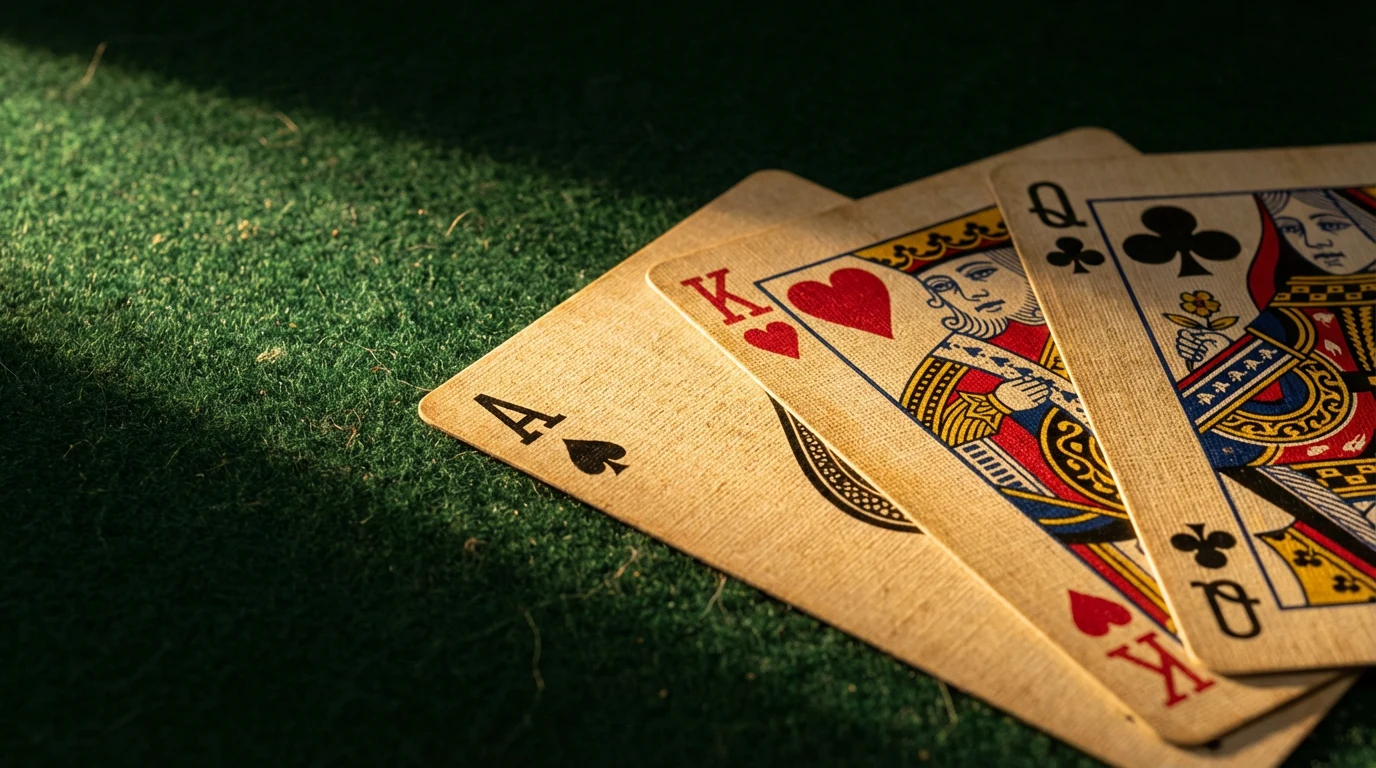
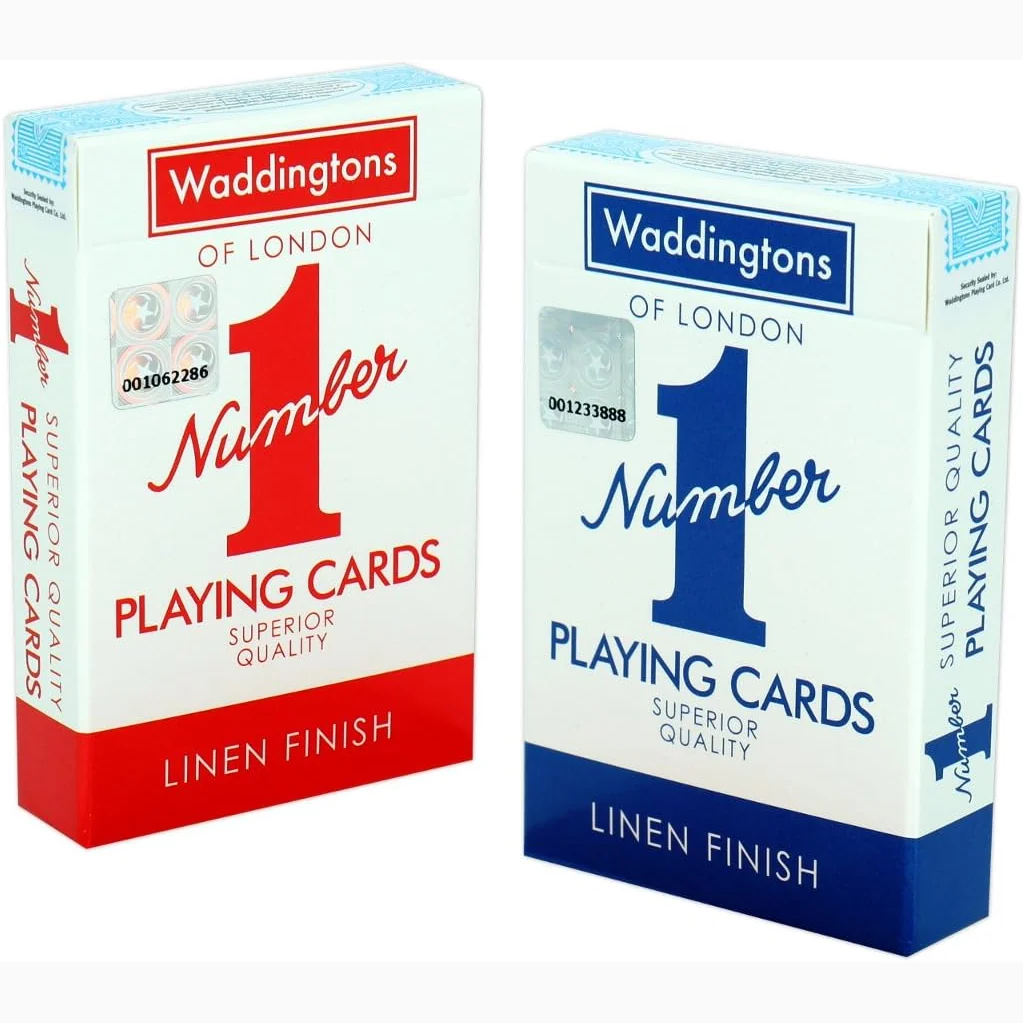
When British players praise a deck for “having linen,” they usually mean a micro-embossed paper surface that breaks up flat contact between adjacent cards. Waddingtons built its reputation on that tactile signature long before polymer specials became shelf staples. The finish does not imitate fabric thread for thread; instead, it borrows linen’s association with durability and even wear. Under soft club lighting, the emboss catches highlights in fine lines that help you judge whether a pack is fresh or tired before you even bend a corner.
What linen texture does in the hand
Imagine two smooth plastic cards pressed together with a faint film of moisture from warm hands. They cling. Now picture two linen-finished paper cards: the peaks and valleys of the emboss create tiny air channels. Those channels are the practical heart of the air-cushion marketing phrase. Shuffling feels less like peeling stickers apart and more like sliding sheets with predictable resistance. Bridge players who table riffle after riffle notice fewer “clumps” mid-stack, whilst whist hosts appreciate how a neat overhand shuffle still separates cleanly.
The texture also changes edge feel. Fingertips read micro-grip along the long side, which can steady a nervous cut for dealer. Children learning patience games benefit because cards are less likely to shoot away in a dry winter dining room. None of this makes linen magical—it simply tilts physics toward controlled separation, which is what social card games reward.
Airflow, humidity, and the British indoors
UK venues swing from overcooked radiators to seaside drafts. Paper linen reacts honestly to that environment. In very dry air, any deck can gain static; linen tends to manage it better than glassy coatings that seal the surface completely. In damp halls, breathable paper stock can absorb a trace of moisture, so wise stewards store spare packs in their boxes rather than loose in metal tins. Rotating two decks during a long drive night gives each pack time to equalise, which preserves the emboss profile that drives airflow benefits in the first place.
If you compare airflow behaviour with pure plastic playing cards, the difference is philosophical as well as physical. Plastic sheds spills and bends back from creases, yet many players describe plastic as “slippery until sticky,” especially when skin oils build on a polished face. Linen paper asks for drier hands and gentler washing habits, but rewards you with a familiar snap. Tournament coders sometimes specify plastic for durability; pub leagues often stay with paper linen because it feels like the game their members learned at school.
Linen finish versus plastic-coated budget packs
Budget imports sometimes advertise a linen look that is only visual printing. Under magnification, the pattern sits flush with varnish. True embossing changes thickness ever so slightly—you can feel it blindfolded if you drag a nail lightly across the face. Waddingtons-style linen pairs with quality pasteboard cores that resist delamination. Cheap cores telegraph bumps through the coating after a dozen shuffles; good cores stay planar so the emboss wears evenly rather than collapsing along hinge lines.
Plastic decks trade emboss for flex memory. They can survive a pint spill but often sound different when slapped on baize. Collectors chasing vintage Waddingtons frequently document emboss depth because it signals storage conditions and authenticity. If you are evaluating a modern tuck, read the fine print: licensed distribution may shift factory location, yet the design goal remains familiar handling for Number 1 loyalists.
Maintenance without fuss
Linen rewards simple habits. Wash hands before club night if you have been eating greasy snacks. Keep a silica gel sachet in your card drawer during humid summers. Avoid rubber-banding decks tightly; pressure flattens emboss peaks over months. When cleaning a table spill, dab—never wipe sideways across a face card with a rough cloth. If a single card corners badly, retire it rather than sanding the edge; uneven wear propagates through shuffles.
For gift packs, leave the cellophane on until the recipient opens—it prevents shop-floor scuffs that matter more on dark backs than on white borders. If you teach beginners, demonstrate how to bridge gently: linen forgives a learning curve better than ultra-thin souvenir stock, but violent bends still crease paper. When a deck retires from competition, label the box “practice” and use it for shuffling drills.
Why clubs still specify linen paper
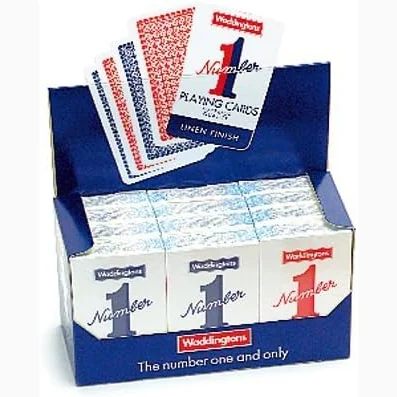
Committee minutes rarely wax poetic, yet “Waddingtons or equivalent linen” appears because members trust the sensory contract. Players know how wide to fan. Directors know how often to replace packs. Caterers know not to stack pint glasses on the card table. Linen finish is part of that unspoken rulebook alongside red and blue back pairing and standard court layouts.
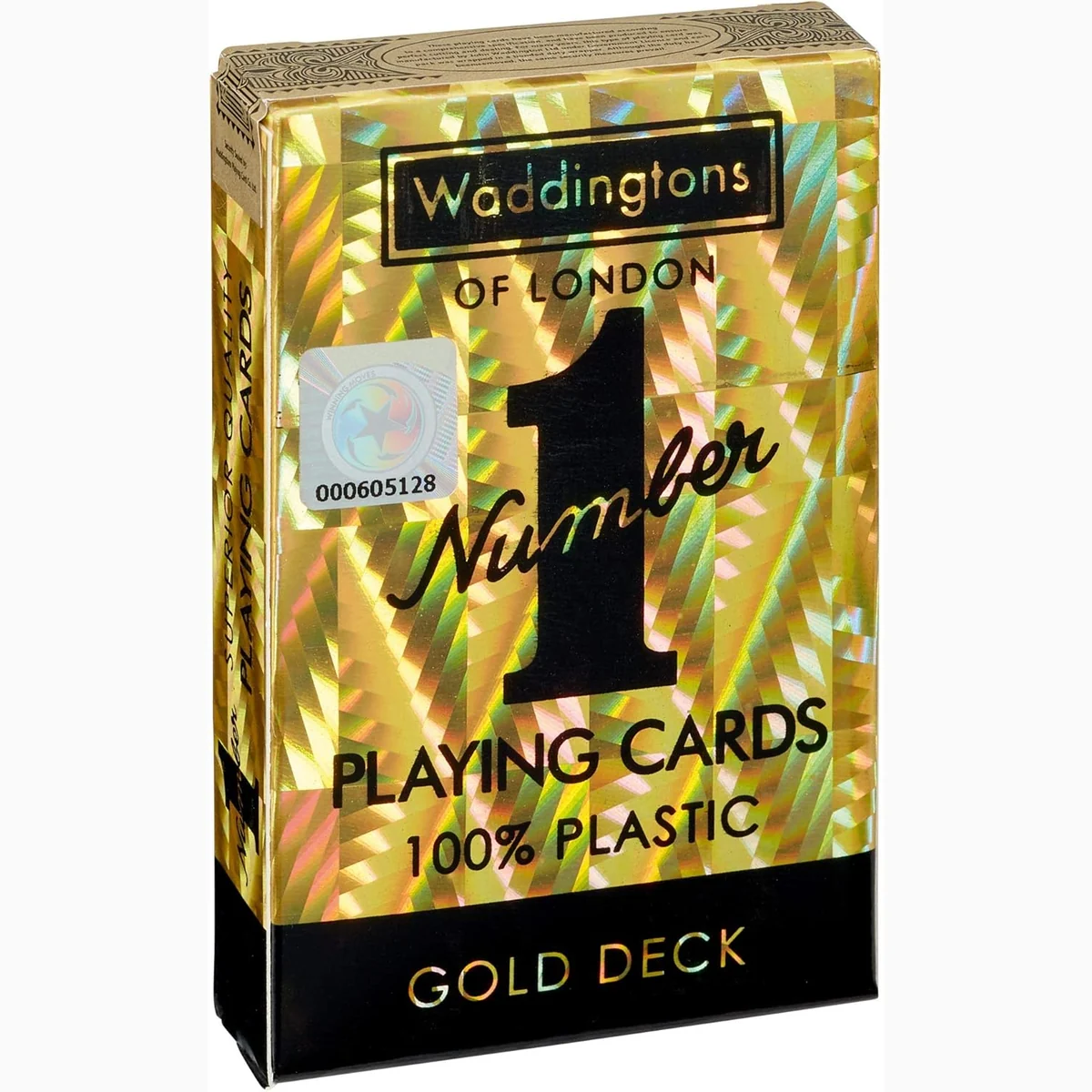
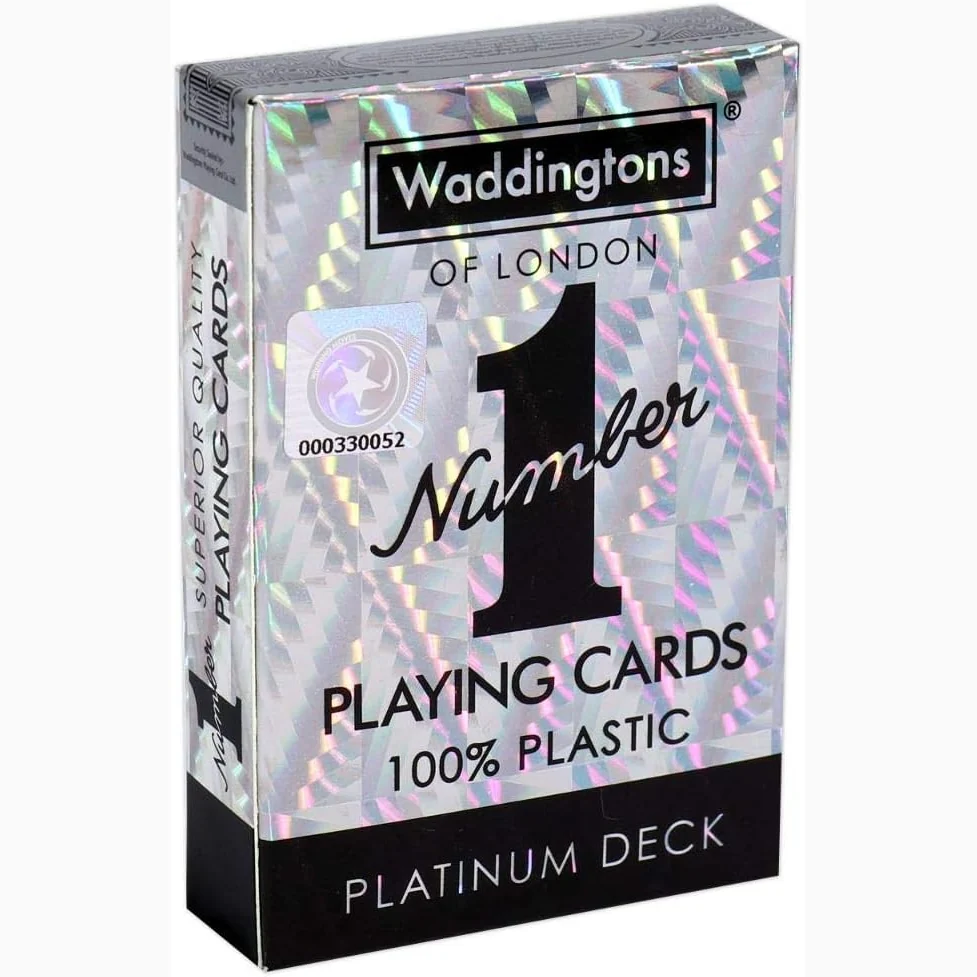
Readers comparing speciality lines should note that metallic or holographic editions change flex and noise even when emboss patterns look similar. Our reviews round-up gathers how hobbyists weigh linen praise against plastic-feel critiques on premium variants. Ultimately, linen finish is the quiet baseline that makes Waddingtons feel like home—whether you are in Leeds, London, or a Highland bothy with a folding table and a pot of tea.
Summary: Linen air-cushion texture improves separation, breathes sensibly in typical UK rooms, and asks only modest care. It is not indestructible, but it is the reason generations say, “Bring the Waddingtons,” when the biscuits come out and the first shuffle begins.
Whether you pair linen with a formal bridge score pad or a chipped mug of instant coffee, the finish remains the tactile handshake between maker and player—predictable, British, and quietly proud of every fine ridge your thumb learns by heart.