
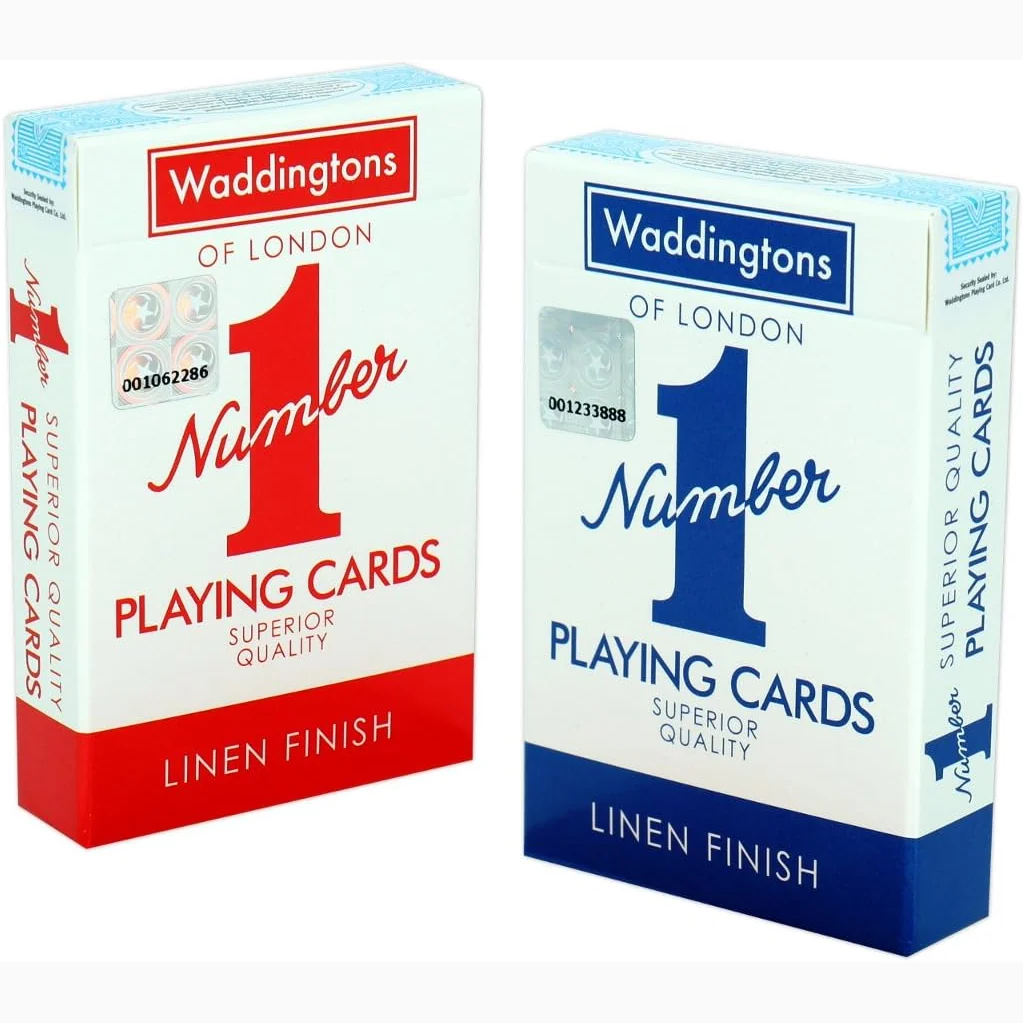
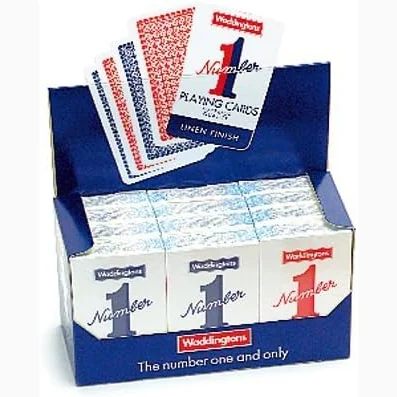
Number 1 Playing Cards are the flagship pasteboards most Britons picture when someone says “Waddingtons deck.” They are not a gimmick line or a seasonal wrapper; they are the workhorse pack that clubs, pubs, and grandparents reach for when the evening turns competitive. The tuck is usually offered in familiar red and blue backs, the ace of spades carries a recognisable flourish, and the courts echo a British design lineage that players memorised long before they cared about brand history.
What defines the Number 1 deck in play
In practical terms, Number 1 is about predictable handling. Card thickness stays even from top to bottom of the pack, which matters when you cut for dealer or weave during a riffle shuffle. Indices are sized for bridge-style fanned peeks but remain legible for rummy across a kitchen table. Corners survive the small abuses of daily life—crumbs, slightly damp hands, the occasional drop—better than ultra-budget imports that crease after one heavy night.
The linen air-cushion finish (explored in depth on our linen finish page) is the quiet hero. It is not merely a matte look; the microtexture changes how layers slide. Air pockets reduce the vacuum effect that makes cheap coatings stick together. If you have ever watched an inexperienced dealer fight a clumped deck, you have seen what linen was engineered to reduce.
Courts, jokers, and the ace of spades
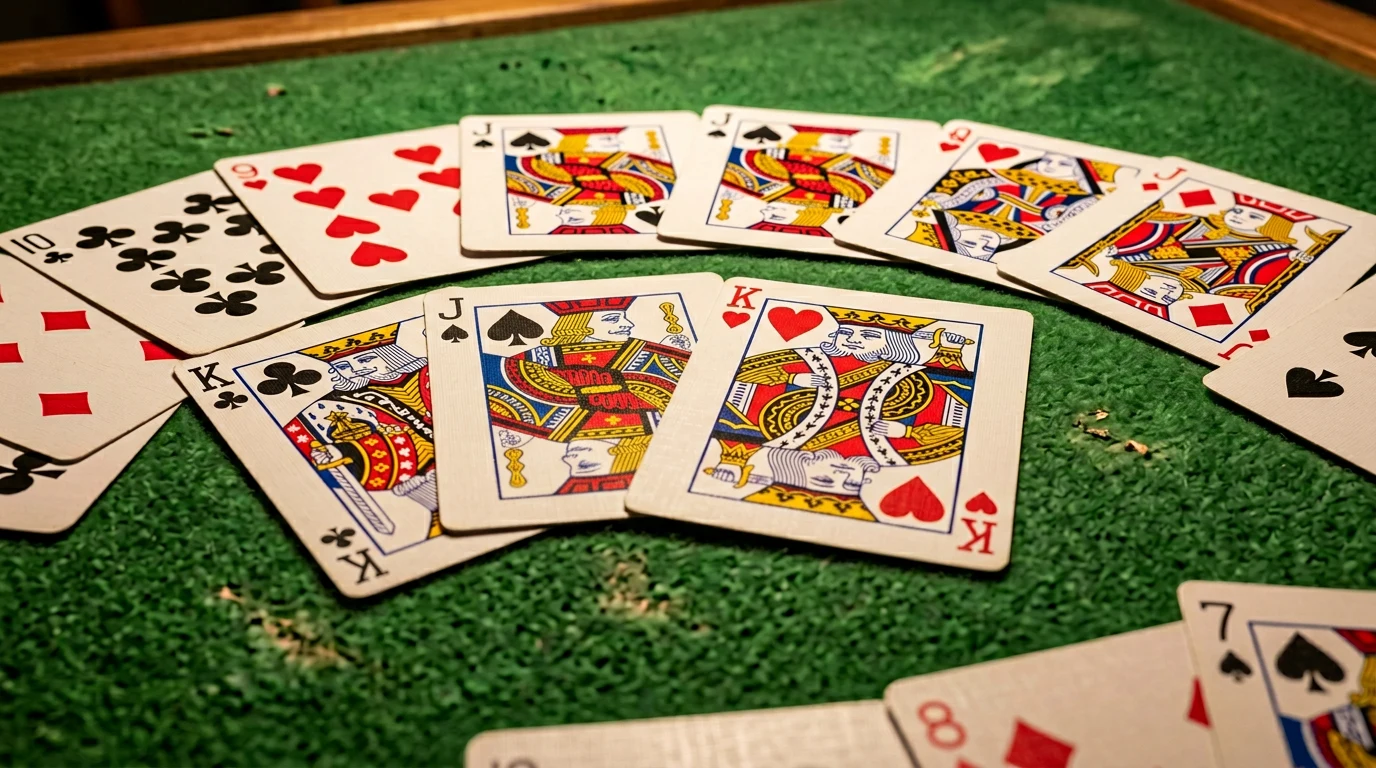
Waddingtons courts lean into a traditional European and British visual grammar: readable crowns, clear suit markers, and colour blocking that pops under warm indoor lighting. That consistency helps teachers demonstrate whist or euchre without students guessing which monarch represents which rank. Joker designs vary by era and factory run, so collectors sometimes chase specific printings even when players shrug and use any available wildcard.
The ace of spades functions as the brand’s handshake. It is large enough to identify the pack at a glance when someone flips the lid at the newsagent. Reissues and licensed distribution may adjust micro-details, which is why auction listings photograph that card first. If you are buying vintage stock, compare the ace against catalogued examples rather than trusting shrink-wrap alone.
Buying checklist for modern shoppers
- Confirm seller reputation—counterfeits are rare but sloppy storage is common.
- Check cellophane integrity if you want a mint gift; opened packs are fine for play.
- Match back colour to your club rules—some duplicate events specify red versus blue.
- Pair with a second deck if you host bridge: rotate packs to even out wear.
Retail packaging sometimes notes Winning Moves distribution. That reflects modern licensing rather than a different card formula. When in doubt, handle a sample. Your fingers tell you whether you have the linen glide you expect.
Care, storage, and table etiquette
Store decks flat in a cool, dry drawer. Avoid leaving them in direct sun on a conservatory table—UV fades backs and can embrittle stock over years. Wipe hands before play if you have been handling crisps; oils work into edges and eventually darken white borders. At tournaments, respect the director’s rules about shuffling: Number 1 tolerates riffles and overhands alike, but aggressive bends still damage any paper board.
If you teach children, start with two-deck patience games before introducing bridge bidding. The tactile feedback of a trusted pack helps them internalise suit hierarchy without staring at a screen. When a deck finally retires, recycle the box locally if permitted and keep one worn pack for crafts—many families mark sentimental dates on the inner flap.
How Number 1 relates to gold and platinum lines
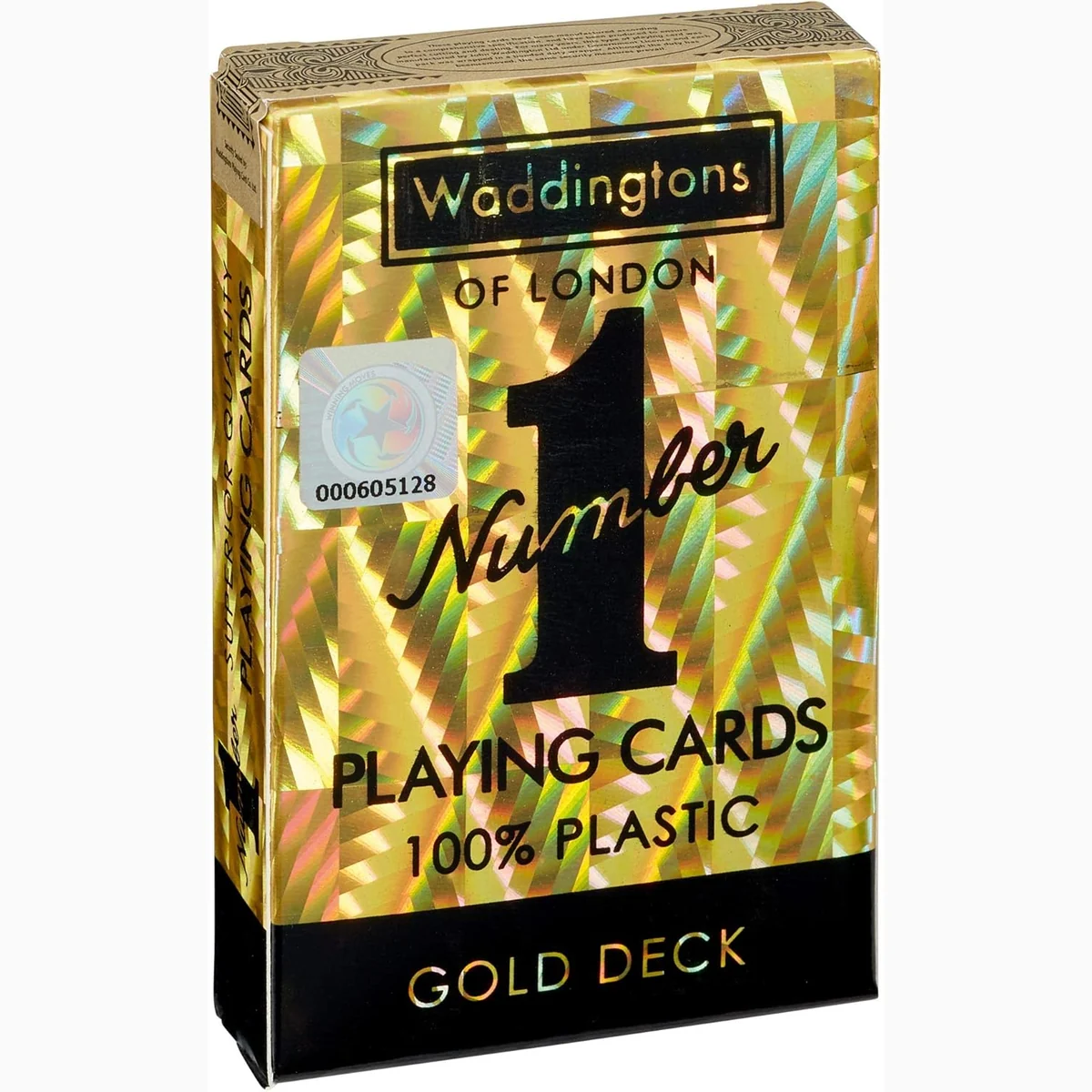
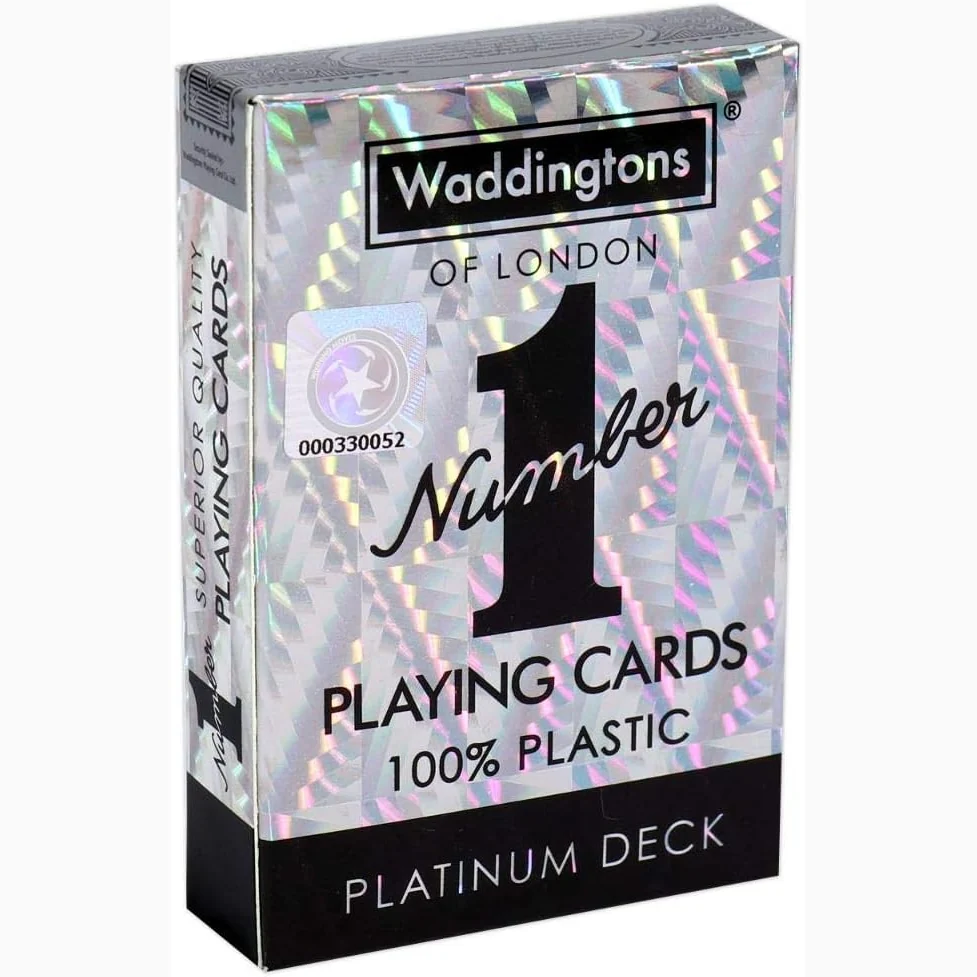
Think of Gold and Platinum as wardrobe changes on the same reliable skeleton. Indices remain familiar, but foils, metallic inks, or polymer substrates alter flex and sound. Purists stick with paper linen; gift-givers often love the sparkle. Neither choice invalidates the other—they serve different audiences at different tables.
Clubs ordering in bulk should read our box of twelve guide to understand how outer cartons mix colours and how storage scales. Historians will prefer the timeline and vintage tells, while cautious buyers can cross-check labels on the genuine packs page.
Across Scotland, England, Wales, and Northern Ireland, community centres still unwrap Number 1 when the whist drive begins. The rhythm—crack the seal, discard the ad card, give three careful shuffles—belongs to the deck as much as the artwork does. When a steward apologises for a worn pack, regulars often joke that only Waddingtons age gracefully anyway.
Bottom line: Number 1 is the standard because it earns the seat. Buy from sources you trust, break the deck in with a few friendly hands, and you will remember why Waddingtons became shorthand for quality in the first place. For player sentiment and nitpicks, see reviews.